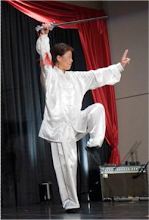
We don’t have to get sick. Our body is designed to heal itself. If you feel tired, or have pain here and there, don’t wait. It’s time to help yourself. All you need to do is to follow the natural way of healing.
Why Natural Way of Healing? I have my doctor to take care of me.
True. When you are sick, you have doctors to take care of you. However, why wait till you get sick when your internal organs get damaged? The body’s natural defense gives small signals when the health status is weakened. Feeling tired and having pain are the common signals. If you go to see a doctor at this time, most likely the tests will show normal, but you don’t feel well.
If we are not taking actions to improve the condition and allow the health to decline further, serious symptoms will occur. The damage will get into the internal organs. At this time, the test result will tell the doctor that you are sick of a named illness. The doctor will prescribe certain drugs to help you recover.
Do you have to wait till you are really sick? You don’t have to. You can take your health in your own hand, and enjoy a healthy and quality life up to 120 years old. Here is a simple solution through Natural Way of Healing.
- Breath deep 3 times a day 20 minutes each time (QiGong)
- Tai Chi at least 2 times a week, best do it every day
- Green barley juice (BarleyLife®) every morning to start your day
Showing posts with label QiGong. Show all posts
Showing posts with label QiGong. Show all posts
Monday, May 11, 2009
Friday, April 24, 2009
World Tai Chi & QiGong Day
On April 25, 2009, the 11th World Tai Chi & QiGong Day will take place in over 60 countries around the world. You can be part of this global event by joining me this Saturday afternoon at 1:30 in the open area outside the Long Branch Community Center, Silver Spring, Maryland.
This annual event was created in 1999 to promote Tai Chi and Qigong and has been held on the last Saturday of April each year. The annual event is open to the general public, and begins in the earliest time zones of New Zealand at 10 am, and then participants across Oceania, Asia, Africa, Europe, North America, and South America take part, with celebrations in sixty nations and several hundred cities, ending with the final events in the last time zones of Hawaii almost an entire day later. Celebrations include mass Tai Chi Chuan and qigong exhibitions in many cities, and free classes in most participating cities. If you are interested, please join me at this event, or join the following Tai Chi classes:
- Long Branch Community Center, Thursdays, 7:30pm (ongoing free class)
- Langley Park Comminity Center, Saturdays (registration needed)
This annual event was created in 1999 to promote Tai Chi and Qigong and has been held on the last Saturday of April each year. The annual event is open to the general public, and begins in the earliest time zones of New Zealand at 10 am, and then participants across Oceania, Asia, Africa, Europe, North America, and South America take part, with celebrations in sixty nations and several hundred cities, ending with the final events in the last time zones of Hawaii almost an entire day later. Celebrations include mass Tai Chi Chuan and qigong exhibitions in many cities, and free classes in most participating cities. If you are interested, please join me at this event, or join the following Tai Chi classes:
- Long Branch Community Center, Thursdays, 7:30pm (ongoing free class)
- Langley Park Comminity Center, Saturdays (registration needed)


Friday, February 20, 2009
Live Wisely and Meridian Channels
The body heals, not the medicine, not the medical equipment. No matter how much medicine we pour into a dead person, it will not work. Because the healing mechanism is with us when we are alive. This is beyond the current medical science can explain. The ancient people figured out wise ways to work with this natural healing mechanism which still work up to this day.
We must not treat our body as a machine. Rather, we should treat it as an extremely highly intelligent being. Having this kind of understanding in mind, we will not try to temper with any part of our body with our shallow knowledge, but try to understand its unique operation as a whole and cope with it according to its natural way.
Tai Chi and QiGong are along this line of Chinese traditional medicine theory to help the body to heal naturally. According to this theory, the blood and energy supply focus on different meridian channels during the 12 time zones of a day. Each pair of related two channels work together to keep a balance.
子zi 11:00pm-1:00am--Gall Bladder Channel
丑chou 1:00-3:00am--Liver Channel
寅yin 3:00-5:00am--Lung Channel
卯mou 5:00-7:00am--Large Intestine Channel
辰chen 7:00-9:00am--Stomach Channel
巳si 9:00-11:00am--Spleen Channel
午wu 11:00am-1:00pm--Heart Channel
未wei 1:00-3:00pm--Small Intestine Channel
申shen 3:00-5:00pm--Bladder Channel
酉you 5:00-7:00pm--Kidney Channel
戌xu 7:00-9:00pm--Pericardium Channel(心包经)
亥hai 9:00-11:00pm--Triple Heater Channel(三焦经)
We must not treat our body as a machine. Rather, we should treat it as an extremely highly intelligent being. Having this kind of understanding in mind, we will not try to temper with any part of our body with our shallow knowledge, but try to understand its unique operation as a whole and cope with it according to its natural way.
Tai Chi and QiGong are along this line of Chinese traditional medicine theory to help the body to heal naturally. According to this theory, the blood and energy supply focus on different meridian channels during the 12 time zones of a day. Each pair of related two channels work together to keep a balance.
子zi 11:00pm-1:00am--Gall Bladder Channel
丑chou 1:00-3:00am--Liver Channel
寅yin 3:00-5:00am--Lung Channel
卯mou 5:00-7:00am--Large Intestine Channel
辰chen 7:00-9:00am--Stomach Channel
巳si 9:00-11:00am--Spleen Channel
午wu 11:00am-1:00pm--Heart Channel
未wei 1:00-3:00pm--Small Intestine Channel
申shen 3:00-5:00pm--Bladder Channel
酉you 5:00-7:00pm--Kidney Channel
戌xu 7:00-9:00pm--Pericardium Channel(心包经)
亥hai 9:00-11:00pm--Triple Heater Channel(三焦经)
Monday, January 19, 2009
Pathways of Healing
When we practice Tai Chi and QiGong for health and healing, it is important to understand the traditional Chinese meridians or channels (经络) which are know as pathways of energy flow. Through practice, we are able to focus the Qi and send it along the pathways for healing and releasing discomfort.
There are twelve primary channels(十二正经) that are related to internal organs. Six can be found on the arms and the other six can be found on the legs. During our practice we stimulate these channels to improve the energy flow through our internal organs.
The channels on the arms are related to heart, pericardium(心包), lungs, large intestine, small intestine, and the trunk of the body which is know as SanJiao(三焦).
The channels on the legs are related to liver, spleen, kidney, stomach, gall bladder, and bladder.
If you can't remember their locations, simply pat along your arms and legs in the morning after you get up and in the evening before you go to bed. You may add a third time during the day while you watch television or listen to music. You will feel good and it IS good for your health.
There are twelve primary channels(十二正经) that are related to internal organs. Six can be found on the arms and the other six can be found on the legs. During our practice we stimulate these channels to improve the energy flow through our internal organs.
The channels on the arms are related to heart, pericardium(心包), lungs, large intestine, small intestine, and the trunk of the body which is know as SanJiao(三焦).
The channels on the legs are related to liver, spleen, kidney, stomach, gall bladder, and bladder.
If you can't remember their locations, simply pat along your arms and legs in the morning after you get up and in the evening before you go to bed. You may add a third time during the day while you watch television or listen to music. You will feel good and it IS good for your health.
Sunday, November 16, 2008
Heng and Ha
Heng(哼)and Ha(哈)are the two sounds when practicing pre-birth Qi(先天气)which is a higher level of Tai Chi QiGong. When one established routine practice of basic Tai Chi QiGong, it might be time to make one step forward. Pre-birth QiGong will lead you to a whole new level.
Heng-and-Ha practice was kept as a secret in Chen’s family. They did this practice in the middle of the night when they believed it was the best time to boost up the Qi. Those of you who had experience of Heng-and-Ha with me in Tai Chi class may recall the strong feeling after a short practice.
Heng-and-Ha is a key step in practicing pre-birth Qi(先天气)which is also known as Dan-Tian-Qi(丹田气), Nei-Qi(内气), or Zhen-Qi(真气). When say Heng, we inhale while the lower abdomen going inward. When say Ha, we exhale while the lower abdomen going outward. It is helpful to practice with movements. One should be relaxed and follow the body's natural way of breathing when first start practicing this type of QiGong. It takes time to train the body, and one should not rush.
This practice is not for beginners, and it is not for those who have pre-conditions of health concerns.
Heng-and-Ha practice was kept as a secret in Chen’s family. They did this practice in the middle of the night when they believed it was the best time to boost up the Qi. Those of you who had experience of Heng-and-Ha with me in Tai Chi class may recall the strong feeling after a short practice.
Heng-and-Ha is a key step in practicing pre-birth Qi(先天气)which is also known as Dan-Tian-Qi(丹田气), Nei-Qi(内气), or Zhen-Qi(真气). When say Heng, we inhale while the lower abdomen going inward. When say Ha, we exhale while the lower abdomen going outward. It is helpful to practice with movements. One should be relaxed and follow the body's natural way of breathing when first start practicing this type of QiGong. It takes time to train the body, and one should not rush.
This practice is not for beginners, and it is not for those who have pre-conditions of health concerns.
Monday, October 27, 2008
Prevent Cancer
We all have cancer cells in our body. When our inner environment is healthy, cancer cells cannot develop. However, if our inner environment is not healthy, the cancer cells may grow wild. Out of many right things we should do, we need to remember two key words: alkaline and oxygen. In today’s blog, we talk about oxygen.
Dr. Otto Warburg won Nobel Prize in 1931 for proving cancer is caused by a lack of oxygen respiration in cells. He said “the cause of cancer is no longer a mystery, we know it occurs whenever any cell is denied 60% of its oxygen requirements”.
While low level of oxygen in cells may be caused by different reasons, we can always find a simple solution to address them all—Tai Chi and QiGong.
It is my personal experience in practicing Tai Chi and QiGong that the level of energy and health improvement is beyond anything else I did. Because this practice can effectively provide cells with basic needs—oxygen.
Dr. Otto Warburg won Nobel Prize in 1931 for proving cancer is caused by a lack of oxygen respiration in cells. He said “the cause of cancer is no longer a mystery, we know it occurs whenever any cell is denied 60% of its oxygen requirements”.
While low level of oxygen in cells may be caused by different reasons, we can always find a simple solution to address them all—Tai Chi and QiGong.
It is my personal experience in practicing Tai Chi and QiGong that the level of energy and health improvement is beyond anything else I did. Because this practice can effectively provide cells with basic needs—oxygen.
Friday, October 10, 2008
Tai Chi QiGong
Qi in Chinese is 气 (chi). The basic meaning of Qi is air. The extended meaning of Qi in practicing QiGong (breathing exercise) is energy or life force.
The ancient people believed that we all have original Qi stored at DanTian area (lower abdomen) at birth. When we grow up to 25 or so, the natural Qi comes to it’s peak and starts to decline. By practicing QiGong we are able to halt or slowdown this aging process.
There are thousands of QiGong styles in China. Not all are safe to practice. Most need close guidance when practicing. Tai Chi QiGong is one of the few styles that are safe to practice following the basic instructions.
QiGong practice is an important part of all my Tai Chi classes. Or we can say, without QiGong, Tai Chi is not really Tai Chi. QiGong is the core of this internal exercise.
I suggest practicing QiGong 3 times a day—in the morning, in the evening, and during the day, 20 minutes each time. It’s not a day’s work. It takes years of practice to regain this life energy.
Come to Nan’s classes for personal instructions.
The ancient people believed that we all have original Qi stored at DanTian area (lower abdomen) at birth. When we grow up to 25 or so, the natural Qi comes to it’s peak and starts to decline. By practicing QiGong we are able to halt or slowdown this aging process.
There are thousands of QiGong styles in China. Not all are safe to practice. Most need close guidance when practicing. Tai Chi QiGong is one of the few styles that are safe to practice following the basic instructions.
QiGong practice is an important part of all my Tai Chi classes. Or we can say, without QiGong, Tai Chi is not really Tai Chi. QiGong is the core of this internal exercise.
I suggest practicing QiGong 3 times a day—in the morning, in the evening, and during the day, 20 minutes each time. It’s not a day’s work. It takes years of practice to regain this life energy.
Come to Nan’s classes for personal instructions.
Tuesday, September 30, 2008
Breathe Deep
Most of us breathe without much awareness. In other words, we are passively breathing whatever way the body is doing. Most of the time, shallow breathing.
Through practicing QiGong (breathing exercise), we can make the breathing slower and deeper. As a result, we will be able to bring much more oxygen into our blood stream, down to each cell.
When first start practicing, follow your body’s natural capacity, or natural breathing. Then focus on DanTian (lower abdomen) breathing. Three times a day, 5-20 minutes each time. This is to get your body prepared for the next step.
Then you may start to practice holding the breath. Inhale–hold–exhale. Hold for 2-4 seconds. It has to be gentle. Don’t force it.
Before you practicing, I suggest you measure the number of breath per minute (count inhale and exhale as one). Most people count 6–8 per minute. Measure again after 6 months of practice. You may be surprised how much you can improve after practicing QiGong.
For personal instructions, come to Nan’s Tai Chi classes at Long Branch Community Center (Thursday evenings) and Langley Park Community Center (Saturday mornings).
Through practicing QiGong (breathing exercise), we can make the breathing slower and deeper. As a result, we will be able to bring much more oxygen into our blood stream, down to each cell.
When first start practicing, follow your body’s natural capacity, or natural breathing. Then focus on DanTian (lower abdomen) breathing. Three times a day, 5-20 minutes each time. This is to get your body prepared for the next step.
Then you may start to practice holding the breath. Inhale–hold–exhale. Hold for 2-4 seconds. It has to be gentle. Don’t force it.
Before you practicing, I suggest you measure the number of breath per minute (count inhale and exhale as one). Most people count 6–8 per minute. Measure again after 6 months of practice. You may be surprised how much you can improve after practicing QiGong.
For personal instructions, come to Nan’s Tai Chi classes at Long Branch Community Center (Thursday evenings) and Langley Park Community Center (Saturday mornings).
Subscribe to:
Posts (Atom)